
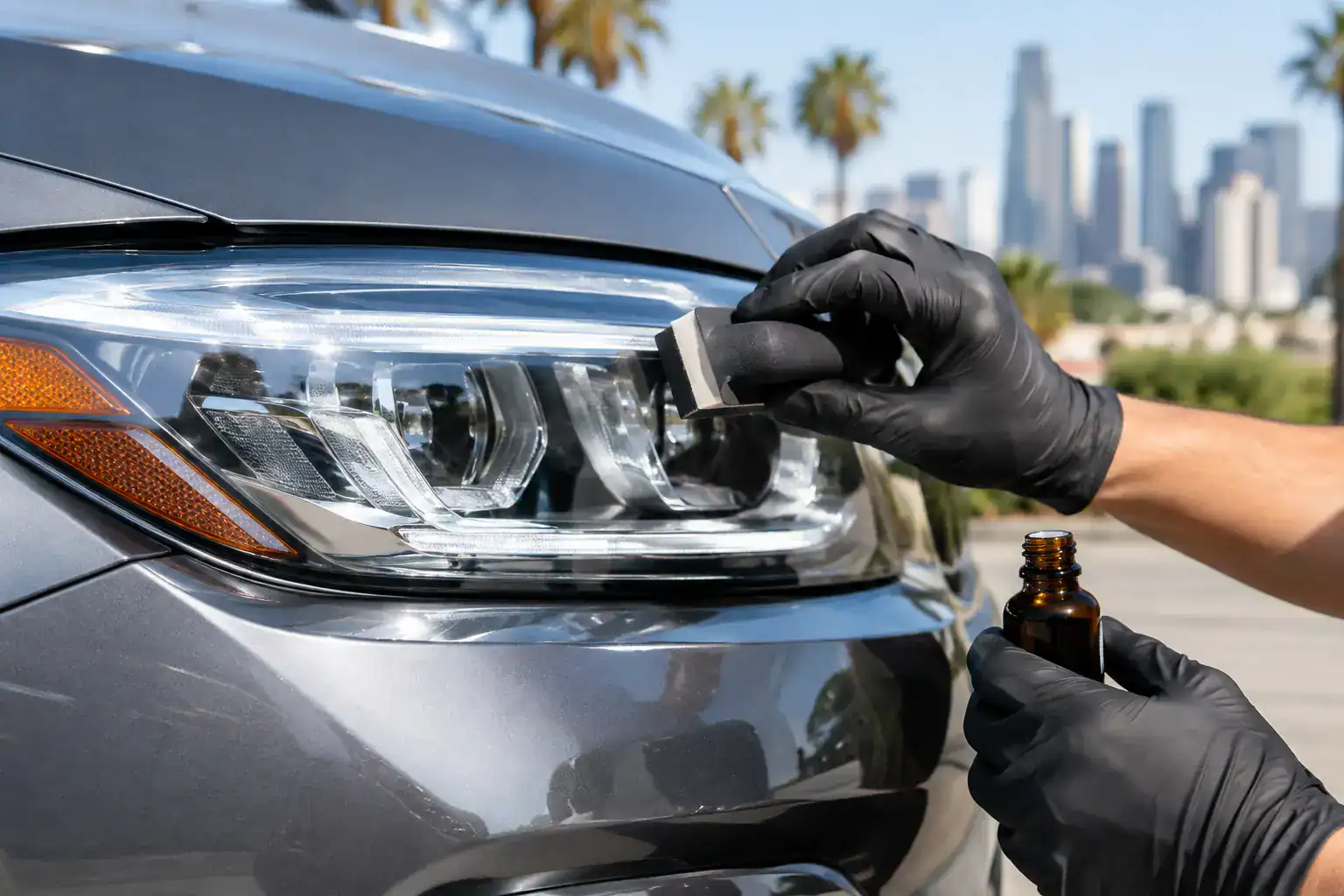
A ceramic headlight coating is not a cosmetic extra added at the end of a quick polish. On a properly restored lens, it is the protective layer that helps keep clear plastic clear after oxidation, yellowing, and surface damage have been removed. That matters in Los Angeles, where intense sun, heat, freeway driving, and outdoor parking can quickly wear down unprotected headlights.
A headlight can look much better after a simple buffing service, then begin to haze again within months if the damaged outer plastic was not fully corrected or if no durable UV protection was applied. The goal is not just a temporary shine. It is to restore usable clarity while preserving the original OEM headlight housing whenever replacement is not necessary.
What a Ceramic Headlight Coating Actually Does
Modern headlight lenses are usually made from polycarbonate plastic. When new, that plastic has a factory-applied UV-resistant layer. Over time, California sunlight breaks that protection down. Heat, road grit, automatic car washes, bug residue, and chemical cleaners add more wear. The result is the familiar yellow, dull, cloudy appearance that reduces light output and makes an otherwise well-kept vehicle look older.
After the damaged material has been carefully removed and the lens has been refined, a premium ceramic UV coating forms a protective barrier on the corrected surface. It is designed to help resist ultraviolet exposure, oxidation, moisture, and everyday contamination. It also makes the lens easier to clean because dirt and road film are less likely to cling as aggressively to a protected surface.
The key word is “help.” A coating cannot make plastic immune to age, rock impacts, severe abrasion, or years of neglected maintenance. It is a long-term protection step, not a permanent shield. Its performance depends on the condition of the lens, the preparation underneath it, the quality of the coating, and how the vehicle is used and stored.
Why Surface Preparation Determines the Result
Coating over oxidation does not fix oxidation. In fact, it can lock in dullness, scratches, or uneven color. That is why professional restoration begins with evaluating the lens rather than immediately reaching for polish.
A lens with mild fading may need less correction than one with deep yellowing, peeling factory coating, prior DIY repairs, or heavy scratching. Cracks inside the housing, moisture intrusion, and damage on the interior side of the lens are different problems entirely. Exterior restoration can improve the outside surface, but it cannot repair a broken seal or internal reflector failure.
For suitable lenses, the restoration process removes compromised plastic in controlled stages. At Sako’s Mobile Headlight Restoration, that includes careful cleaning and masking around the headlights before progressive wet sanding, typically from 400 through 4000 grit as the lens condition requires. The sanding stages level oxidation and defects instead of simply hiding them. Two-stage machine polishing then refines the surface back toward optical clarity.
Before the coating is applied, the lens must be free of polishing oils, residue, and moisture. An alcohol preparation step is used to create a clean surface for the ceramic coating to bond correctly. Skipping this step, rushing the cure time, or applying coating over incomplete sanding can shorten the life of the finish.
A Clear Lens Should Not Come at the Expense of Paint
Headlight restoration happens close to painted bumpers, fenders, hoods, trim, and rubber seals. Thorough masking is not a minor detail. It protects surrounding areas during sanding, polishing, and coating application.
Mobile work also requires discipline. The technician has to account for sun position, wind, dust, available space, and the vehicle’s condition at the appointment location. A driveway or workplace parking space can be a convenient setting for the customer, but the preparation standard should remain the same as it would be in a shop.
Ceramic Coating vs. a Quick Buff or DIY Kit
A quick buff may improve the appearance of light haze, especially from a distance. But polishing alone does not always remove the degraded layer of plastic, and it does not replace meaningful UV protection. That is why headlights often look better right after a low-cost service, only to fade again soon afterward.
Consumer restoration kits can be useful for a patient owner working on mild oxidation. Their limitations are usually consistency, available sanding range, proper surface cleaning, and the quality of the final protectant. Some kits use wipes or sprays that produce a fast gloss but do not offer the same durability as a professionally applied ceramic UV coating.
Professional restoration is usually the better choice when lenses are heavily yellowed, have failed previous repairs, show significant scratching, or need to be corrected evenly across a large or complex shape. It also saves the owner from spending a weekend testing products without knowing whether the haze is on the exterior, inside the housing, or beyond practical restoration.
What Ceramic Protection Can and Cannot Prevent
A quality coating is especially valuable for vehicles parked outdoors every day. Southern California sun is persistent, and even a car driven mostly for short errands can accumulate UV exposure while sitting in a driveway, apartment lot, or office parking structure with open sides.
Ceramic protection can help slow the return of oxidation and make routine cleaning less harsh on the lens. It can also improve the finished appearance by adding a smooth, even protective layer after correction. For drivers who rely on their vehicle at night, clearer lenses can support better forward illumination by allowing more of the headlight’s existing output through the plastic.
It cannot repair damage beneath the lens, stop every stone chip, or correct a headlight that has become structurally compromised. It also cannot compensate for burned-out bulbs, weak electrical components, failing projectors, or headlights that were poorly designed from the factory. A trustworthy assessment should separate a restorable exterior lens from a housing that needs replacement.
How Long Does a Ceramic Headlight Coating Last?
There is no honest single answer because exposure varies widely. A garage-kept weekend vehicle and a rideshare car parked outside across Los Angeles every day do not experience the same conditions. Coastal salt air, high-desert heat, frequent freeway mileage, automatic washes, and aggressive cleaners can all affect longevity.
The coating should be viewed as an investment in slowing future deterioration, not a reason to forget about the headlights. A professionally corrected lens with premium UV protection can provide durable results, but maintenance still matters. Sako’s backs its workmanship with a one-year warranty, with clear boundaries for issues outside the work itself, such as impact damage, accidents, internal moisture, or future neglect.
Simple Aftercare That Protects the Finish
The best aftercare is uncomplicated. Wash the lenses with normal car-wash soap and a clean, soft mitt rather than household degreasers or abrasive pads. Dry them gently instead of rubbing road grit across the plastic.
Avoid harsh solvent-based cleaners, strong acidic products, and repeated scrubbing with dry towels. If bugs or tree sap sit on the headlights, soften and rinse them first instead of scraping. Parking in a garage or under covered shade when practical also reduces UV exposure, though most Los Angeles drivers will still need protection that works in real outdoor conditions.
Do not apply random waxes, polishes, or “headlight brightener” products over a ceramic-coated lens unless the product is known to be compatible. Many of these products are unnecessary and can leave residue that makes future inspection more difficult.
When Restoration Is Better Than Replacement
Replacing headlights can be expensive, especially on newer vehicles with LEDs, adaptive systems, sensors, or complex housings. Aftermarket replacements may also vary in fit, lens quality, weather sealing, and beam pattern. If the original OEM housing is intact and the problem is limited to exterior oxidation, restoration with ceramic UV protection is often a practical way to improve appearance and nighttime visibility without replacing parts that still function properly.
Replacement becomes more reasonable when the lens is cracked through, the housing leaks, internal components are damaged, or prior sanding has removed too much material. The right recommendation depends on the actual condition of the headlight, not on selling the same service for every vehicle.
A good ceramic-coated restoration starts with honest inspection and careful correction. When the lens is a suitable candidate, protecting the freshly restored surface gives it the best chance to stand up to the next stretch of California sun, commuting, and daily use.
Leave a Reply