
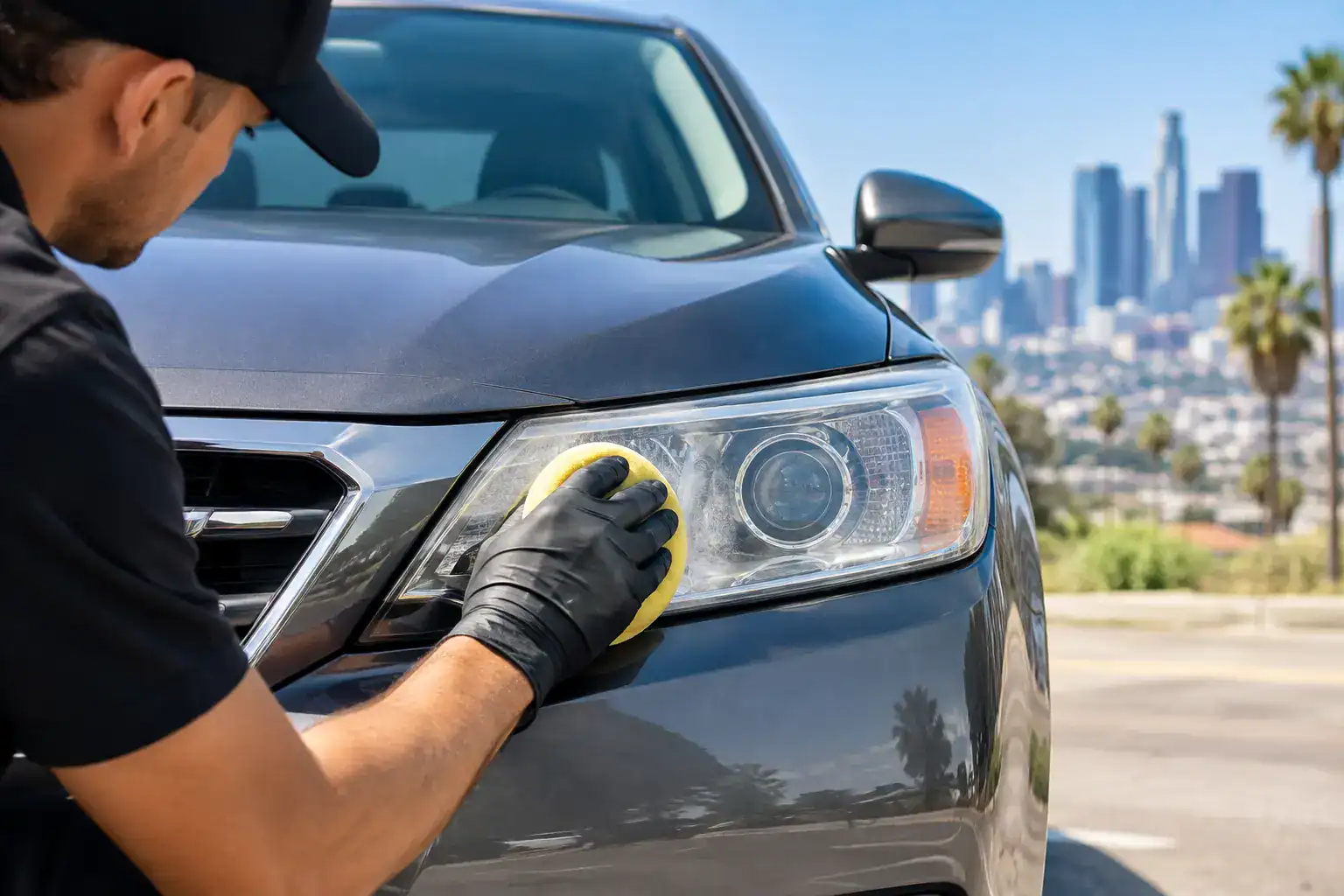
A yellow, cloudy headlight lens can make an otherwise well-kept vehicle look neglected – and it can reduce useful light on the road after dark. Same day headlight restoration gives Los Angeles drivers a practical way to correct that damage without losing an afternoon at a dealership or replacing original headlight assemblies that may still be structurally sound.
For most vehicles, the work can be completed at your home or workplace in one appointment. The point is not to put a temporary shine on the lens. It is to remove the damaged outer plastic carefully, refine the surface, and seal it against the intense UV exposure that causes headlights to haze again.
What Same Day Headlight Restoration Actually Means
Same-day service refers to the restoration being performed and completed during a scheduled appointment. It does not mean every vehicle can be booked with no notice, or that every headlight issue has the same repair time. Appointment availability, your location, prior repairs, lens condition, and travel distance all affect scheduling and pricing.
Once the appointment is confirmed, a professional restoration generally takes a few hours, depending on the vehicle and the amount of oxidation. You do not need to arrange a ride, wait in a shop lobby, or leave your car overnight. Mobile service is performed where the vehicle is parked, provided there is reasonable access to the front of the car and a suitable work area.
Sako’s Mobile Headlight Restoration serves Greater Los Angeles at customer locations and also offers in-shop appointments in Burbank. That flexibility matters for commuters, families, rideshare drivers, and anyone who needs their vehicle available the same day.
Why Headlights Turn Yellow and Hazy in Los Angeles
Most modern headlight lenses are made from polycarbonate plastic, not glass. The material is durable and impact-resistant, but its factory UV coating gradually breaks down. Once that protective layer fails, sunlight, heat, road grit, car-wash abrasion, and environmental contamination begin to damage the outer surface.
California sun speeds up the process. What starts as a faint dullness can become yellow oxidation, cloudy patches, fine cracking, peeling old coating, or scratches that scatter light. A quick polish may make the lens look better for a short time, but it cannot reliably address oxidation that remains beneath the surface.
This is why restoration should begin with an honest inspection. Some lenses need moderate correction; others have failed aftermarket coatings or deeper surface damage that require more sanding. Cracks, moisture inside the housing, broken mounting tabs, or reflector damage are different problems. Surface restoration can improve the exterior lens, but it cannot repair internal electrical or housing failures.
The Difference Between a Quick Buff and Proper Restoration
A quick buff focuses on appearance. Proper restoration focuses on controlled surface correction and protection.
First, the surrounding paint, trim, bumper edges, and chrome are carefully masked. Headlight work should never be treated as an excuse to risk adjacent panels. The lens is then cleaned and inspected so the technician can distinguish surface oxidation from old coating failure, scratches, and deeper defects.
The correction stage uses progressive wet sanding, beginning as needed around 400 grit and moving through finer grits up to 4000. This is the step that removes the degraded plastic rather than simply hiding it. The starting grit depends on the condition of the lens. An aggressive starting point may be necessary for severe oxidation, but using more abrasion than needed is not good workmanship.
After sanding, two machine-polishing stages refine the lens toward optical clarity. The surface is then prepared with alcohol to remove polishing residue before the protective coating is applied. That preparation matters. A coating applied over oils or residue may not bond correctly, which can compromise both appearance and durability.
The final ceramic UV coating is what separates a lasting service from an unfinished correction. It helps shield the restored polycarbonate from the sun and everyday exposure that caused the original haze. No exterior coating is immune to neglect, harsh chemicals, or physical damage, but a professionally prepared and coated lens has a far better foundation than a lens that was simply buffed clear.
When Restoration Makes More Sense Than Replacement
Replacing headlights can be the right choice when the housing is cracked, leaking, damaged from a collision, or has internal component failure. It may also be necessary when the reflector bowl, wiring, adjustment hardware, or lens structure is beyond repair.
But when the housing is intact and the problem is on the outside of the lens, restoration is often the more sensible option. Keeping the original OEM housing can avoid the fitment, beam-pattern, condensation, and material-quality concerns that sometimes come with inexpensive replacement assemblies. It can also cost substantially less than replacing both headlights.
The decision should be based on condition, not a blanket promise. A reputable specialist should tell you if restoration is unlikely to meet your expectations before starting work. Deep internal haze or spider cracking within the lens material may improve only to a point, even with careful correction.
What Affects Same-Day Pricing
Same-day headlight restoration starts from $99, with a customized quote based on the vehicle and work required. Clear pricing is not just a number on a page. It means explaining why one set of headlights requires more labor than another.
Severe yellowing, failed previous repairs, sanding marks left by DIY kits, unusually large lenses, and difficult vehicle designs can increase correction time. Mobile travel distance can also affect the quote, especially outside the standard Los Angeles service area. Photos of both headlights in daylight are usually the quickest way to receive a more accurate estimate before booking.
Be cautious with a quote that sounds too good to account for preparation, sanding, polishing, masking, and protective coating. A low price may reflect a short buffing service rather than a full restoration process. The immediate result can look similar from several feet away, but the difference often appears after the lens sees more sun and road use.
Getting the Best Result From Your Appointment
Before the technician arrives, park the vehicle where the front end is accessible and remove personal items that may be in the way. The headlights should be reasonably clean, though they do not need to be detailed beforehand. If possible, send clear photos before the appointment and mention any prior restoration, coating, collision repair, or replacement work.
After restoration, follow the coating care guidance provided for your service. Avoid harsh cleaners or abrasive scrubbing on the lenses, particularly during the initial curing period. Regular gentle washing helps remove dirt and film that can dull the surface over time.
Parking in a garage or shaded area when practical can reduce UV exposure, although that is not realistic for every Los Angeles driver. The more useful habit is noticing changes early. If a lens begins to look dull years later, addressing light surface wear is usually easier than waiting for heavy oxidation to return.
What the One-Year Workmanship Warranty Covers
A one-year workmanship warranty provides reassurance that the restoration was performed with care, but it should be understood for what it is. It supports the quality of the restoration work and coating application, not every condition a headlight may encounter after service.
It does not make an already cracked housing unbreakable, repair internal moisture, reverse collision damage, or cover new physical damage from road debris, chemicals, accidents, or improper cleaning. This distinction protects customers from unrealistic expectations and keeps the focus on the part of the repair the technician can control: careful exterior lens correction and coating application.
If your headlights are cloudy enough to affect the look of your car or make night driving less comfortable, take a few photos while the issue is visible. A same-day appointment can restore clarity while preserving your original housings, and it lets you get back to your normal Los Angeles schedule with one less vehicle concern waiting on the list.
Leave a Reply