
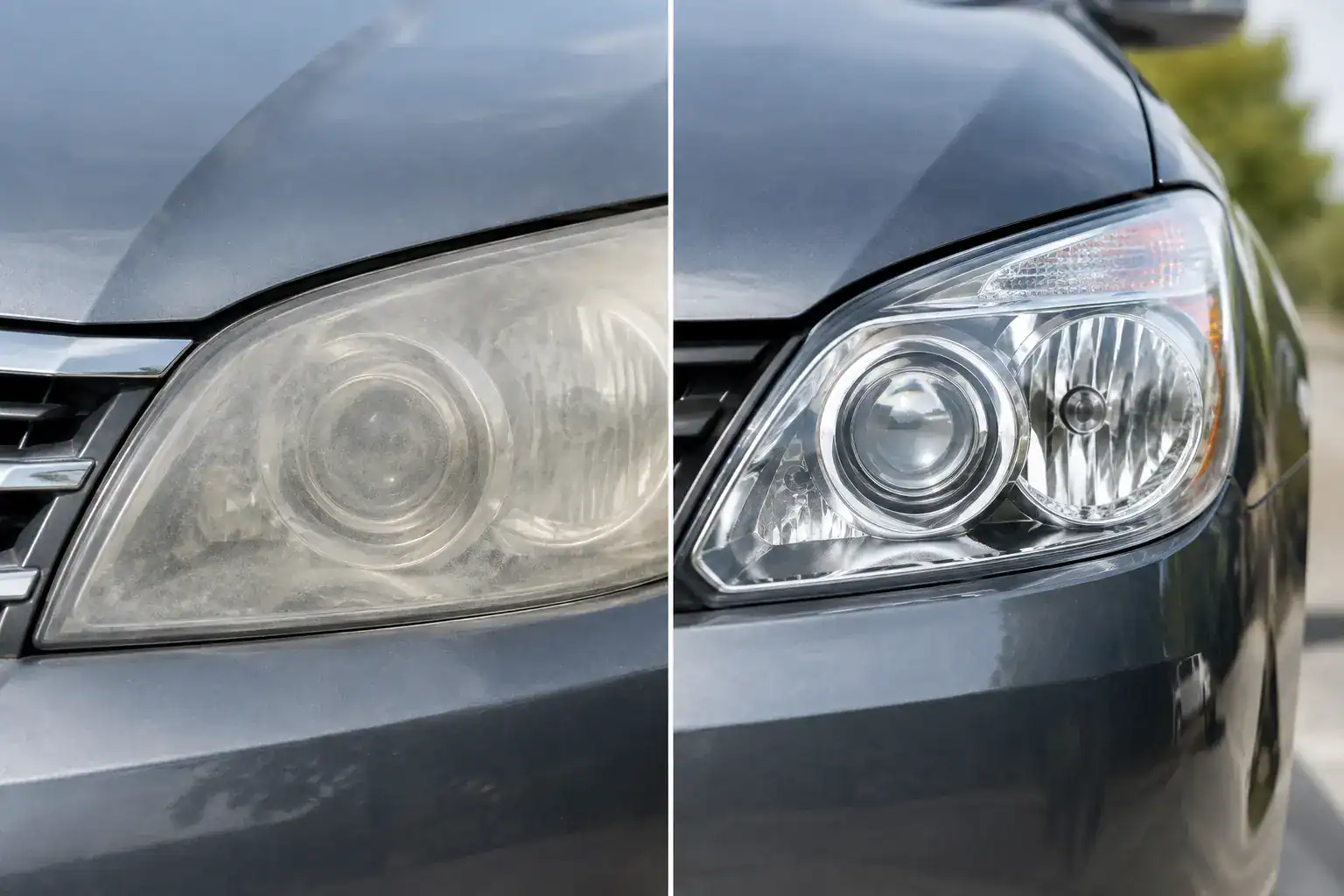
A headlight lens can look only mildly yellow in the driveway and still reduce useful light on a dark Los Angeles street. That is why the top signs headlights need restoration are not limited to obvious discoloration. Changes in clarity, beam performance, surface texture, and moisture can all tell you whether the outer lens needs attention or whether a larger repair may be necessary.
Modern headlights use polycarbonate plastic lenses. They are durable, but California sun, road grime, heat, car-wash chemicals, and everyday abrasion slowly wear away the factory UV-resistant layer. Once that protection breaks down, the lens oxidizes. Light has to pass through that damaged surface before it reaches the road, so even a working bulb may no longer perform as it should.
Top Signs Headlights Need Restoration
Yellow or brown discoloration on the outside
Yellowing is the sign most drivers recognize first. It often begins near the top of the lens, where direct sunlight does the most damage, then spreads across the front. A brownish tint usually means the oxidation has progressed further and the degraded plastic is no longer just a cosmetic issue.
If the yellow color is on the exterior surface, restoration can often remove it through controlled sanding and polishing. A quick hand polish may brighten the lens temporarily, but it does not reliably remove the damaged material below the surface. The correct approach depends on how deep the oxidation goes and whether a previous repair has left uneven areas behind.
A cloudy, milky, or fogged appearance
Cloudiness scatters light. Instead of sending a focused beam down the road, a hazy lens diffuses part of the output in different directions. Drivers may notice that their headlights look illuminated when viewed from outside the vehicle but still feel weak from behind the wheel.
Look at the lens in direct daylight and from an angle. If it appears milky, dull, or gray rather than clear, the outer surface may be oxidized. If the fogginess is visibly trapped inside the housing, however, exterior restoration alone will not solve it. Internal haze, failed seals, or moisture require inspection before any work begins.
Night driving feels dimmer than it used to
A gradual loss of nighttime visibility is easy to miss because it happens over months or years. You may find yourself straining to read street signs, relying more on high beams, or feeling that wet pavement absorbs your headlights. Before assuming the bulbs are the only issue, inspect the lenses.
A weak beam can have several causes: aging bulbs, electrical problems, incorrect headlight aim, cloudy lenses, or a combination of them. Restoration is most useful when the bulbs are functioning properly but the lens surface is clearly degraded. It cannot correct a failing projector, damaged reflector, or misaligned housing, which is why a proper assessment matters.
The surface feels rough or looks cracked under sunlight
Run a clean fingertip lightly across a dry lens. A healthy lens should feel relatively smooth. Oxidized plastic can feel chalky, textured, or rough, especially along the upper edge and outer corners.
Fine surface crazing can also appear as small crack-like lines in bright sunlight. Some shallow defects can be corrected during restoration. Deep cracking, impact damage, or cracks that extend through the lens are different matters. In those cases, replacement may be safer because the housing could lose its ability to keep out water.
Swirl marks, scratches, and failed DIY repairs are visible
Scratches do more than affect appearance. They create more edges that scatter light, and aggressive sanding without a measured progression can leave distortion behind. It is common to see headlights that were treated with a consumer kit or a fast buffing service, only to turn dull again after a few months.
The issue is usually not that the lens was polished. The issue is that the damaged layer was not fully leveled, the sanding steps were incomplete, or the corrected plastic was left without a durable UV barrier. A professional restoration process should remove damage gradually, refine the surface through multiple sanding stages, polish it to clarity, and seal it with a protective coating.
Water droplets or condensation appear inside the headlight
Condensation needs a closer look. A small amount of temporary fogging after a major temperature change can occur in some housings, but repeated droplets, standing water, or moisture that does not clear can point to a compromised seal, crack, vent issue, or damaged housing.
Do not assume exterior restoration will fix this problem. The lens may still benefit from correction, but the water-entry source needs to be addressed first. Moisture can damage bulbs, wiring, reflectors, and electronic components, turning a surface-care issue into a more expensive repair.
Why a Clear Lens Is More Than a Cosmetic Upgrade
Clear headlights improve the vehicle’s appearance, but the more practical benefit is light transmission. The lens is part of the headlight system, not merely a cover. When oxidation blocks and scatters light, a newer bulb cannot fully compensate for it.
For commuters, parents driving after activities, rideshare drivers, and anyone traveling on poorly lit roads, that difference matters. Headlight clarity can also affect how well other drivers see your vehicle. On a silver, white, or gray car in evening traffic, dull headlights can make the entire front end look less defined.
Restoration also helps preserve the original OEM housings. Factory housings generally fit correctly and are designed for the vehicle’s specific lighting system. Replacing them can be costly, and lower-priced aftermarket assemblies may vary in fit, beam pattern, sealing quality, and long-term durability. If the housing is structurally sound, restoring the original lens is often the more sensible option.
When Restoration Makes Sense and When It Does Not
Restoration is a strong option for exterior oxidation, yellowing, surface haze, light scratches, and dullness caused by UV exposure. It is especially worthwhile when the headlight housing, mounts, seals, and internal reflectors remain in good condition.
It may not be the right solution for a broken lens, severe internal moisture, a burned reflector, loose mounting tabs, or damage from a collision. A reputable specialist should explain that distinction rather than promise that every headlight can be made perfect. The goal is clear, protected lenses and safe expectations, not a cosmetic shortcut.
The condition of prior repairs also affects the result. A lens that has been repeatedly buffed, coated with an unknown product, or sanded unevenly may require additional correction. Material type, existing damage, and travel distance are all reasonable factors in a customized quote.
What a Proper Headlight Restoration Process Should Include
A durable result starts with preparation, not polish. At Sako’s Mobile Headlight Restoration, each lens is inspected and cleaned before surrounding paint, trim, and body panels are carefully masked. This protects the vehicle while allowing the damaged plastic to be corrected precisely.
The lens is progressively wet-sanded, typically from 400 through 4000 grit as the condition requires. The early stages remove oxidation and deeper defects; the finer stages refine the surface so it can be polished without leaving sanding marks. Two machine-polishing stages restore optical clarity, followed by an alcohol preparation step that removes polishing residue before coating.
The final protection matters just as much as the correction. A premium ceramic UV coating is applied to help shield the renewed lens from California sun exposure. Without a quality protective layer, freshly corrected plastic can oxidize again quickly. This is the difference between addressing the problem and simply making it look better for a short time.
Mobile service also changes the experience. Instead of arranging a ride, spending time in a waiting room, or leaving your vehicle at a shop, restoration can be performed at your home or workplace throughout Greater Los Angeles. In-shop appointments in Burbank remain an option for customers who prefer them.
How to Keep Restored Headlights Clearer for Longer
After restoration, regular washing helps remove road film, bugs, and contaminants that can sit on the lens. Avoid abrasive pads, harsh degreasers, and dry wiping when the headlights are dusty. Parking in shade or using a covered space when practical can reduce cumulative UV exposure, though no vehicle in Southern California avoids the sun entirely.
If you notice new haze, peeling coating, or a change in clarity, address it early rather than waiting until the lens is heavily oxidized again. Workmanship warranties should be read carefully so you understand what is covered and what falls outside normal service, such as collision damage, failed housings, or water intrusion.
A clear headlight does not need to be a surprise discovery at the next car wash. If your lenses look yellow, cloudy, rough, or noticeably dim at night, having them assessed now can protect visibility, preserve the original housings, and make every evening drive feel a little more certain.
Leave a Reply