
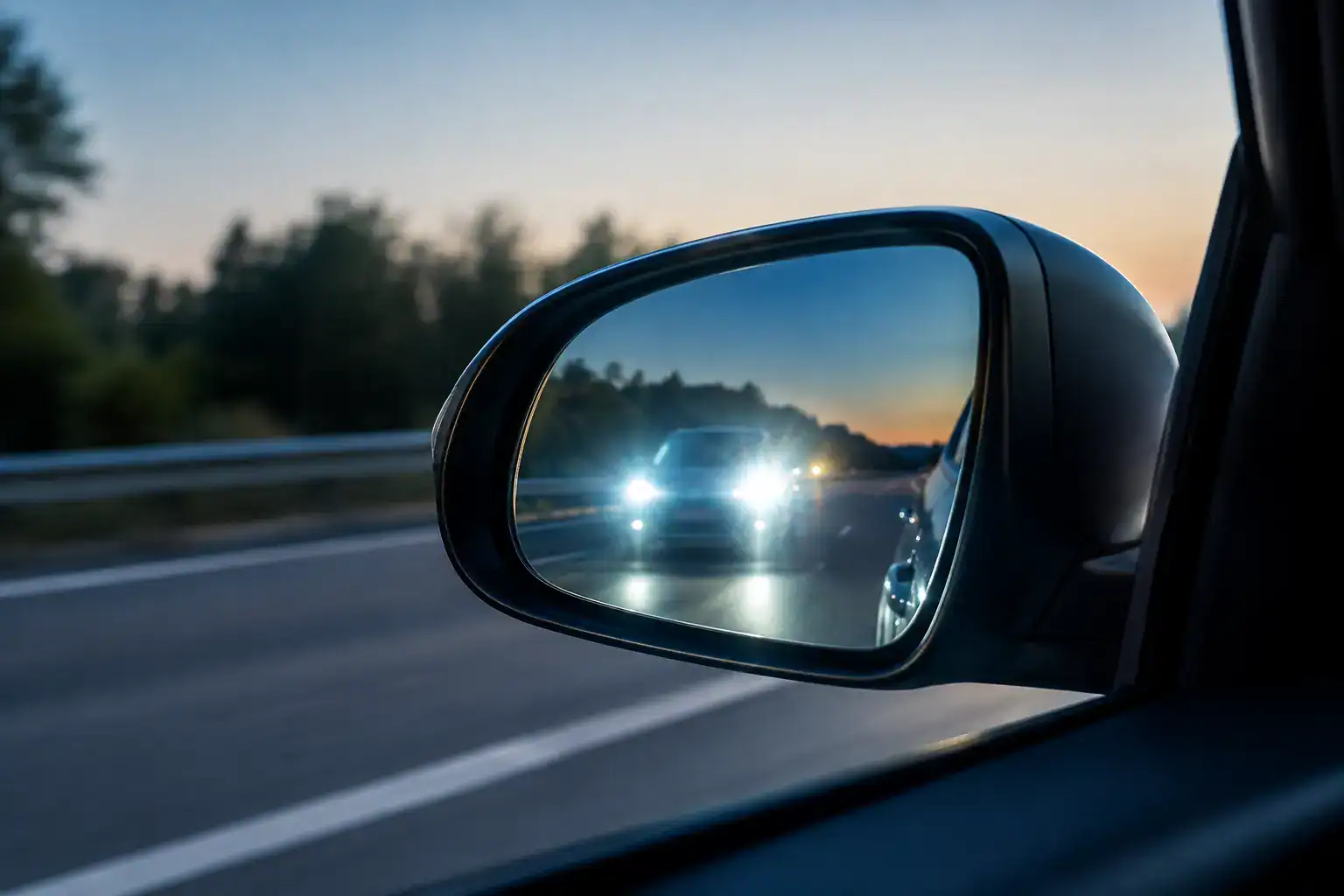
A hazy headlight lens does more than make a vehicle look older. It scatters the light that should be aimed down the road, creating bright, uneven patches in front of the car and reducing useful distance visibility. Effective headlight glare reduction is not about making headlights dimmer. It is about restoring a clean, controlled beam pattern so you can see hazards sooner without sending unnecessary light into other drivers’ eyes.
For Los Angeles drivers, this matters on more than dark canyon roads. Nighttime freeway traffic, wet pavement, reflective signs, construction zones, and tired eyes can all make glare feel worse. If your lenses are yellow, cloudy, scratched, or peeling, restoring them properly can make a noticeable difference in how the road is illuminated.
What Causes Headlight Glare?
Modern headlight housings are designed around a precise relationship between the bulb, reflector or projector, and outer lens. When all three are in good condition and the headlights are aimed correctly, the housing shapes light into a controlled pattern. The cutoff stays where it belongs, and the brightest part of the beam reaches the road rather than wandering upward.
The outer lens is usually polycarbonate plastic. Over time, California sun exposure breaks down its factory UV layer. Heat, road debris, car washes, pollution, and ordinary abrasion leave the surface oxidized or scratched. Instead of allowing light to pass through cleanly, that damaged surface disperses it in multiple directions.
That dispersion is a major reason cloudy headlights can feel both dim and glaring. The driver may see less useful light farther ahead, while oncoming traffic sees more uncontrolled light closer to eye level. A quick polish can make a lens look clearer for a short time, but it may not remove the deeper oxidation and may leave the lens unprotected against another round of UV damage.
Headlight Glare Reduction Starts With Lens Condition
A clear lens alone will not correct every lighting problem, but lens condition is often the most visible and correctable part of the system. The key distinction is between surface shine and actual surface correction.
When oxidation is present, the damaged plastic needs to be removed in a controlled manner. That is why a professional restoration process begins with inspection and cleaning, followed by careful masking to protect surrounding paint, trim, chrome, and bumper edges. The goal is to preserve the original OEM housing while correcting the worn outer surface.
At Sako’s Mobile Headlight Restoration, the correction process uses progressive wet sanding, typically moving from 400 through 4000 grit as the lens condition requires. Lower grits address deeper oxidation, peeling coating, and scratches. Finer grits refine the sanding marks before two stages of machine polishing restore optical clarity. This is not a one-size-fits-all sequence. A lightly hazed lens should not receive the same aggressive correction as a heavily oxidized lens with failed prior repairs.
After polishing, the lens is prepared with alcohol so the protective coating can bond to a clean surface. A premium ceramic UV coating is then applied to help shield the corrected plastic from sun exposure. That final protection is not an optional cosmetic add-on. Without it, a freshly polished lens can begin oxidizing again much sooner, especially on vehicles parked outdoors across Los Angeles.
Clear Lenses Help, but Headlight Aim Still Matters
It is possible to have clear headlights that still create glare. If the beam is aimed too high, has an incorrect bulb installation, or comes from a damaged internal reflector, the light can still be uncomfortable and unsafe for other road users.
After restoration, take a moment to evaluate how the headlights perform at night. On level ground, the beam should illuminate the roadway evenly without appearing to point into the rear windows of vehicles ahead. If other drivers regularly flash their high beams at you when your low beams are on, headlight aim deserves attention.
Aim issues can happen after suspension work, collision repairs, bulb changes, or carrying unusually heavy cargo. Some vehicles use manual adjustment screws, while others have self-leveling systems that may need diagnosis. Lens restoration improves light transmission through the housing, but it cannot repair a broken leveling motor, a warped reflector, or an incorrectly modified lighting setup.
This is where the trade-off matters. Brighter is not always better. High-output bulbs, aftermarket LED conversions, and poorly fitted HID kits can create more glare when the housing was not designed for them. The most comfortable and effective result usually comes from a clear, protected lens, correctly aimed factory-style lighting, and components that work together as intended.
Signs Your Lenses May Be Adding to Glare
Headlight problems are not always obvious in daylight. A lens can look only slightly dull from the curb but still scatter a significant amount of light at night. Look closely for yellowing near the top of the lens, a white or milky haze, fine cracking, peeling clear coating, or roughness that does not wipe away after washing.
Night driving offers other clues. You may notice a fuzzy beam edge, bright reflections directly in front of the vehicle, reduced contrast on dark roads, or a feeling that the headlights are on without reaching far enough ahead. These symptoms do not automatically mean the bulbs need replacement. In many cases, the lens is blocking and dispersing light before it can do its job.
Do not confuse condensation inside a housing with exterior oxidation. Light moisture can sometimes clear as the housing warms up, while standing water, cracked housings, or internal clouding may require a different repair. A proper inspection should identify whether the problem is on the lens surface, inside the housing, or related to bulb and aiming issues before work begins.
Why a Quick Buff Is Not the Same as Restoration
Many consumer kits and quick services rely heavily on a polishing compound. Polishing has a place in the final stages, but it cannot always level deeper oxidation, failed factory coating, or scratches evenly. If the damaged material remains underneath, the lens may look better briefly and then turn cloudy again.
Professional restoration takes more time because the surface must be corrected in stages. Controlled sanding removes the damaged layer. Machine polishing refines the surface toward clarity. Proper prep supports coating adhesion. A durable UV coating helps protect the finished lens from the conditions that caused the failure in the first place.
That process also protects the vehicle around the headlights. Tape and masking are not details to skip. Headlight lenses sit close to painted bumper covers, fenders, grilles, and delicate trim. Careful masking allows the technician to work the lens without treating your paint as collateral damage.
Replacement can be appropriate when a housing is cracked, leaking, internally burned, or structurally damaged. But replacing an entire assembly simply because the outer lens is oxidized can be expensive, especially when aftermarket replacement units have uncertain fit, lens quality, or beam performance. If the original housing is sound, restoration is often the more practical way to retain OEM fit while improving nighttime visibility and appearance.
Keep Restored Headlights Clear Longer
A ceramic UV coating provides a protective barrier, but no exterior surface is maintenance-free. Parking in a garage or under cover when possible reduces prolonged UV exposure. Regular washing removes road film, bug residue, and contaminants that can cling to the lens surface. Use a soft wash mitt and avoid abrasive pads or harsh dry wiping.
If you notice new haze, peeling, cracks, or moisture inside the assembly, address it early rather than waiting for visibility to decline. The sooner a changing lens is evaluated, the more straightforward the solution may be.
For drivers who spend long hours on Los Angeles freeways, carry family at night, or simply want their vehicle to look properly cared for, clear headlights are a practical safety detail. A correctly restored and protected lens lets the lighting system do what it was designed to do: put useful light on the road, keep the beam more controlled, and make night driving less tiring.
Leave a Reply